
01
Establish the applicable requirements
Identify the site's Grid Code, connection, restoration and reporting obligations.
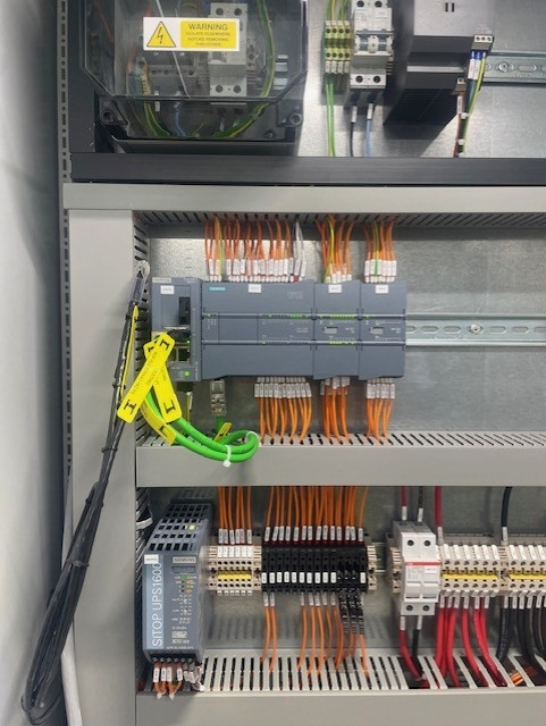
GRID RESILIENCE
A resilient control and communications solution designed to maintain essential plant visibility and secure remote access during a loss of site supplies.
Project summary
GC0156 introduced requirements supporting the Electricity System Restoration Standard, including 72-hour resilience for relevant onsite plant and apparatus following a loss of site supplies. For generating sites, this can require essential control, communications and auxiliary-power equipment to remain available throughout an extended restoration event.
SES Control & Automation designed and commissioned a dedicated PLC, secure communications and backup-power solution to support these requirements while allowing non-essential equipment to be safely shut down.
The project combined PLC and SCADA engineering, industrial communications and resilient auxiliary power into a single system for a renewable-energy generating site.
GC0156 supports Great Britain's Electricity System Restoration Standard by strengthening the ability of relevant organisations and generating sites to remain controllable and contactable during a Partial or Total Shutdown.
Depending on the site's obligations, selected plant and apparatus may need sufficient independent power and communications resilience to remain available for up to 72 hours following the loss of normal site supplies. Relevant equipment can include control systems, communications equipment, network infrastructure, remote-access facilities and the auxiliary systems needed to support them.
Meeting the requirement involves more than selecting a battery or UPS. The essential electrical load, battery autonomy, equipment starting characteristics, communications paths, failure modes, environmental conditions, operating procedures, testing arrangements and required compliance evidence must all be considered.
The precise application of GC0156 depends on the site and its contractual and Grid Code obligations. Site owners should confirm their specific requirements with the relevant technical and regulatory parties.
The solution
SES Control & Automation developed a self-contained resilience system incorporating a dedicated industrial PLC, secure network infrastructure, backup power and a browser-based operator interface.
Following a loss of the normal site supply, the system preserves power to the essential control and communications equipment while non-essential equipment is shut down. This maintains critical monitoring, secure communications and controlled operating capability throughout the outage.
A secure web interface gives authorised personnel visibility of essential plant signals and system status. The interface operates from the resilient control system and supports SCADA resilience without depending on the site's normal SCADA platform remaining available.
The dedicated resilience panel combines control, communications and backup-power equipment within a self-contained system.
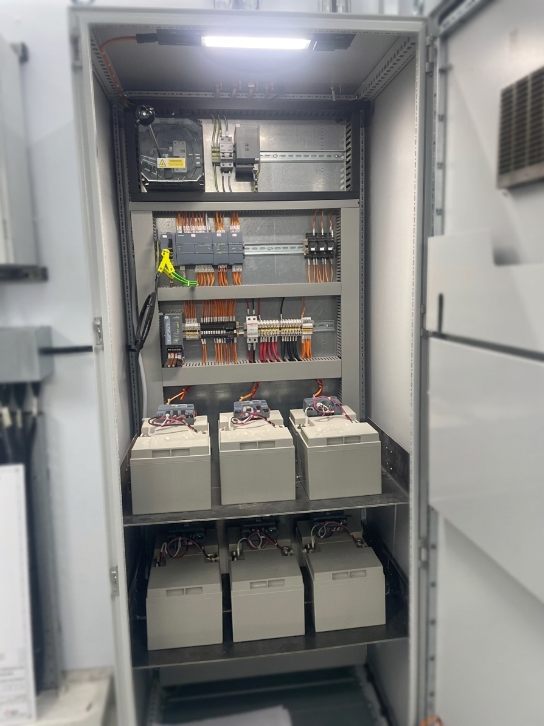
Built for extended operation
The resilience panel contains an industrial UPS and six battery units supporting the equipment required for continued monitoring, secure remote communication and UPS and battery autonomy during an extended restoration event.
The PLC continuously monitors the condition of the incoming supply, backup-power system and critical equipment. During an extended outage, it manages the required control sequence and presents clear system status and diagnostic information to authorised operators.
Engineering process
Identify the site's Grid Code, connection, restoration and reporting obligations.
Determine which control, communications, networking and supporting systems must remain available.
Establish normal consumption, peak demand, starting loads and credible operating scenarios.
Size the UPS, batteries, distribution and protection for the required autonomy, including appropriate design margins and battery ageing.
Provide controlled load shedding so the available stored energy supports only the required equipment.
Keep the necessary routers, switches, firewalls, remote-access equipment and control interfaces operational.
Use PLC or SCADA functionality to supervise incoming supplies, battery condition, alarms, communications and system status.
Verify control sequences, failure modes and backup duration, and retain the evidence required for the site's compliance process.
SES can assess, design, integrate, test and document resilient control, communications and auxiliary-power solutions that support a site's GC0156 and ESRS compliance activities. Final applicability and compliance depend on the site, connection arrangements, obligations, agreed requirements, testing and supporting evidence.
Secure remote visibility and control
The purpose-built web interface allows authorised personnel to view the resilient system using a standard web browser.
It presents the essential information required during an outage, including power-supply condition, backup-system status, communications availability, system alarms and the state of the relevant operating permissives.
Remote commands are protected by authenticated access and remain subject to hardwired site permissives. This prevents a web command from bypassing the plant's physical safety and operating conditions.
Engineering highlights
Essential control and communications equipment supported during an extended power outage.
Non-essential equipment is removed while critical systems remain energised.
Dedicated PLC functionality that does not rely on the normal site SCADA system.
Authenticated browser access protected by industrial network security.
Remote actions remain subject to physical plant conditions and safety interlocks.
Clear monitoring of power, backup supply, communications and system health.
The outcome
The completed solution provides an independent and secure means of maintaining essential control and communications capability during an extended loss of power.
The system was designed, installed and commissioned to provide 72-hour resilience while retaining the site's existing safety controls and operational permissives.
FAQ
GC0156 is a modification to the Great Britain Grid Code that supports implementation of the Electricity System Restoration Standard. It introduces and updates requirements intended to improve the controllability and availability of relevant electricity-system assets during restoration events.
For affected parties and sites, relevant plant, apparatus, control and communications facilities may need to remain resilient for up to 72 hours following a loss of site supplies during a Partial or Total Shutdown. The exact equipment and evidence required depend on the site's applicable obligations.
Not necessarily. The requirement concerns the continued availability of the plant, control, communications and supporting equipment required for the site's restoration obligations. Non-essential equipment may be shut down so that backup power can be prioritised for essential systems.
Not on its own. A suitable solution should consider the essential load, battery autonomy, battery ageing, load shedding, communications resilience, failure modes, monitoring, operating procedures, maintenance and testing.
In many cases, existing sites can be retrofitted with dedicated backup power, PLC monitoring, secure communications and controlled load shedding. The appropriate design depends on the existing electrical and control architecture.
SES Control & Automation can assess existing control and communications equipment, define essential loads, design and integrate resilient PLC and backup-power systems, provide secure remote visibility, and support functional testing and compliance evidence.
Technical references
These official sources explain the regulatory background. This page describes an SES engineering project and should not be treated as legal or regulatory advice.
SES Control & Automation can assess your existing control, communications and auxiliary-power arrangements and develop a practical resilience solution for your site.